



The Ishango and Lebombo bones are ancient artifacts that represent the earliest known evidence of mathematical counting and data storage. These Paleolithic tools suggest that the first use of accounting emerged in Africa tens of thousands of years ago to track vital information. Specifically, they serve as the ancestors to every ledger, spreadsheet, and financial model used by TYS today.
The Dawn of Calculation
Archaeology often focuses on stone tools or cave paintings. However, the story of numbers is equally ancient. Before humans built cities, they needed methods to track time and resources. Consequently, early humans turned to the bones of animals. They etched distinct marks into these bones. Thus, they created a permanent record of their reality.
This practice marks a pivotal shift in human cognition. We moved from merely observing the world to measuring it. Therefore, these artifacts are not just old bones. They are intellectual milestones. Indeed, they prove that the first use of accounting predates writing by several millennia.
The Lebombo Bone: The Oldest Known Mathematical Artifact

The Lebombo bone holds a prestigious title. Archaeologists consider it the oldest known mathematical artifact in the world. Discovered in the Lebombo Mountains between South Africa and Eswatini, it dates back approximately 44,000 years. Yes you read that right, 44,000 years ago.
Examining the Artifact
Physically, the artifact is a small section of a baboon fibula. Yet, its significance is massive. It features 29 distinct notches carved into its side. These notches are deliberate. They are not accidental scratches from butchery.
The Significance of the Number 29
The number 29 offers a crucial clue. A lunar cycle lasts roughly 29.5 days. Therefore, scholars believe this bone was a lunar calendar. Someone in the Middle Stone Age was tracking the passage of time.
This act is the essence of accounting. Accounting is fundamentally about tracking a value over time. In this case, the value was time itself. Additionally, many anthropologists suggest the user was a woman. She may have been tracking her menstrual cycle. Thus, the first accountant in history might have been female.
The Ishango Bone: An Early Computer?
While the Lebombo bone is older, the Ishango bone is more complex. Discovered in the Democratic Republic of the Congo, this artifact is roughly 20,000 years old. It resides today in Brussels, but its story remains African.
A Mathematical Masterpiece
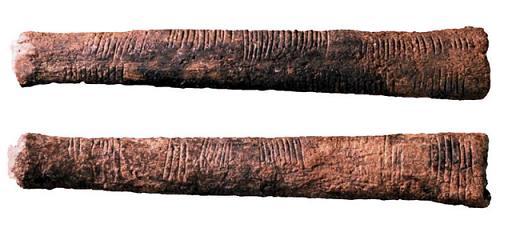
Like its predecessor, this tool is a baboon fibula. However, it features a piece of quartz at one end. This suggests it served as a writing tool. Furthermore, the markings are intricate. They are not simple tallies.
The notches appear in three distinct columns.
- Column One: Primes (11, 13, 17, 19).
- Column Two: Base 10 or 20 calculations.
- Column Three: Doubling patterns (3 and 6, 4 and 8).
Calculating Complexity
This complexity leads to a fascinating theory. Many experts view the Ishango bone as an early computer. The user was not just counting. They were calculating. They understood prime numbers. They used a logical system.
Consequently, this artifact represents the first use of accounting that involved complex arithmetic. The user was balancing numbers. They were creating logical groups. This is the same logic TYS uses to balance a complex portfolio today.
Comparing the Ancient Ledgers
It is helpful to view these two artifacts side-by-side. They show the evolution of thought.
| Feature | Lebombo Bone | Ishango Bone |
| Estimated Age | 44,000 Years | 20,000 Years |
| Location | Border Cave (South Africa) | Ishango (DR Congo) |
| Primary Function | Tally / Lunar Tracker | Calculation / Arithmetic |
| Complexity | Single Sequence | Three distinct columns |
| Modern Equivalent | A Calendar | A Calculator |
Why This History Matters to TYS
You might ask why an accounting firm cares about old bones. The answer is simple. TYS respects the deep roots of our profession. We see a direct line from the Ishango bone to our work.
The urge to organize data is human. It is a survival instinct. Early humans tracked the moon to predict seasons. Similarly, we track finances to predict market trends. The tools have changed. The intent remains the same. The first use of accounting was about survival. Today, it is about wealth preservation.
The Role of Communication in History
Understanding these artifacts requires excellent communication. Archaeologists must explain complex math to the public. Similarly, effectively marketing these discoveries ensures they are not forgotten. For example, DNA’s 15+ years of marketing communications expertise highlights how vital clear messaging is for preserving history. Without clear communication, the significance of the first use of accounting would remain buried.
From Tally Sticks to Spreadsheets
The evolution of accounting is a story of better tools.
- Bones: Durable but limited space.
- Clay Tablets: Broader surface, but heavy.
- Papyrus: Portable, but fragile.
- Paper: The gold standard for centuries.
- Digital Spreadsheets: Infinite capacity.
However, the logic remains constant. Every entry on a balance sheet is a “notch.” Every total is a “grouping.” Therefore, when TYS manages construction accounting, we are channeling that ancient Ishango mathematician. We are simply using faster tools.
The Gender of the First Accountants
We must revisit the creator of the Lebombo bone. As mentioned, the 29 notches suggest a lunar or menstrual tracker. Consequently, women were likely the pioneers of this science.
They needed to predict cyclical events. They required precision. Thus, they invented the tally stick. This challenges the stereotype of accounting as a male-dominated history. In reality, the first use of accounting was likely a female innovation.
Mathematical Sophistication in Paleolithic Africa
These bones debunk a common myth. Many believe math began in Greece or Egypt. However, the evidence points south. The mathematical logic in the Ishango bone is undeniable.
Specifically, the grouping of 11, 13, 17, and 19 is striking. These are prime numbers. Random scratching does not produce primes. Therefore, the Ishango people possessed a mathematical curiosity. They were exploring number theory. This occurred 15,000 years before Pythagoras.
The Function of the “First Use of Accounting”

Why did they count? Survival required it.
- Resource Management: How much food do we have?
- Time Tracking: When will the rains return?
- Trade: Did I get a fair exchange?
The first use of accounting was utilitarian. It solved problems. Today, TYS solves problems. We tell you where your money is. We tell you when to invest. We are the modern keepers of the tally stick.
Conclusion: The Legacy of the Bone
The Ishango and Lebombo bones are treasures. They remind us that intelligence is ancient. Humans have always been calculators. We have always been accountants.
These artifacts represent the spark of civilization. That spark eventually built the pyramids. Later, it built Wall Street. Ultimately, it built the modern financial systems TYS navigates for you. The first use of accounting was a humble scratch on a bone. Yet, it changed the world forever.
Frequently Asked Questions (Q&A)
Q: What is widely considered the first use of accounting in human history?
A: Most historians cite the tally marks on artifacts like the Lebombo and Ishango bones as the earliest evidence. These notches indicate a deliberate system to track quantities, time, or items.
Q: Why is the Ishango bone often called an early computer?
A: Experts call it an early computer because the mathematical groupings are complex. The columns include prime numbers and calculations that utilize a base system, suggesting logical processing rather than simple counting.
Q: How does the Lebombo bone relate to the number 29?
A: The bone contains exactly 29 notches. This number correlates closely with the lunar cycle (29.5 days), suggesting it was used as a calendar or cycle tracker.
Q: Where can I see the Ishango bone today?
A: You can visit the Ishango bone at the Royal Belgian Institute of Natural Sciences in Brussels, Belgium.7 It remains one of their most prized displays.
Q: Why do some researchers believe the first accountants were women?
A: The connection between the Lebombo bone’s 29 notches and the lunar/menstrual cycle suggests women created these tools. They likely used them to track biological and seasonal cycles essential for survival.