



The CPA Shortage Is Real. A Fractional CFO Is Your Smartest Answer.
Fewer accountants are entering the profession, and experienced CPAs are retiring faster than firms can replace them. For most small and mid-sized businesses, hiring a full-time CFO or senior controller now costs too much. A fractional CFO gives you senior-level financial strategy, clean books, and a faster month-end close for a fraction of the cost of a full-time executive.
What is going on?
- The accountant shortage stems from mass retirements and fewer graduates completing the 150-hour CPA requirement.
- A full-time CFO commands a median base salary near $270,000 before benefits, bonuses, and recruiting costs.
- Using a Fractional CFO typically costs 60–80% less than a full-time hire.
- Fractional CFOs deliver strategy, forecasting, and oversight, not just bookkeeping.
- The best model pairs a fractional CFO with reliable bookkeeping and smart automation.

You Feel the Accountant Shortage. Here’s Why It’s Happening.
If you’ve tried to hire an experienced accountant lately, you already know the problem. Qualified candidates are scarce, salaries keep climbing, and good people get poached fast.
Two forces drive the shortage.
1. Experienced CPAs are retiring. According to the American Institute of CPAs, 75% of current CPAs will reach retirement eligibility within the next 15 years (Forbes Councils). Between 2020 and 2022 alone, roughly 300,000 accountants and auditors left the field (Acobloom).
2. Fewer graduates enter the pipeline. Most states require 150 credit hours of college study to earn a CPA license, a full year beyond a standard bachelor’s degree. Schools awarded 17% fewer accounting bachelor’s degrees and 21% fewer master’s degrees in 2023 than in the 2015/16 academic year (The CPA Journal). CPA exam applications fell roughly 27% in just two years, and that decline has persisted for a decade (Ramp, citing the AICPA/NASBA Trends Report).
The result: Large corporations absorb the talent that remains, and small and mid-sized businesses get priced out.
What the Shortage Costs Your Business
When you can’t hire the right financial talent, the damage shows up quietly and then all at once:
- Your month-end close drags on. You make decisions on numbers that are weeks old.
- Cash flow surprises you. Without forecasting, you react instead of plan.
- Lenders and bonding companies lose confidence. Late or inconsistent financial statements weaken your position.
- You become the finance department. Every hour you spend reconciling accounts is an hour you don’t spend growing the business.
- Tax opportunities slip past you. Without year-round planning, you pay more than you need to.
Many owners patch the gap with a mix of offshore outsourced teams, automated accounting software, and part-time bookkeepers. Those tools handle transactions. None of them tells you what the numbers mean or what to do next.
That’s where a fractional CFO comes in.
A fractional CFO is an experienced financial executive who works with your business part-time, on a monthly retainer or project basis. You get the same strategic leadership a large company gets from a full-time CFO, but you pay only for the hours and expertise you actually need.
A fractional CFO typically:
- Builds cash flow forecasts and budgets
- Oversees and speeds up your month-end close
- Produces accurate financial statements lenders and investors trust
- Analyzes profit margins by product, service, or job
- Develops KPIs and financial dashboards
- Guides pricing, financing, and growth decisions
- Coordinates tax planning with your CPA
- Prepares you for acquisitions, expansion, or a future sale
Think of it this way: Your bookkeeper records what happened. Your fractional CFO tells you what it means and what to do next.
Fractional CFO vs. Full-Time CFO: The Cost Comparison
The numbers make the case on their own.
| Full-Time CFO | Fractional CFO | |
| Typical annual cost | $250,000–$600,000+ including salary, benefits, and recruiting (SDO CPA) | $47,000–$190,000 (SDO CPA) |
| Median base salary | About $269,750 before benefits, bonus, or equity (5ftview, citing Robert Half) | No salary, benefits, or payroll tax |
| Time to hire | Months of search and ramp-up | Weeks |
| Flexibility | Fixed cost regardless of need | Scales up or down with your business |
| Breadth of experience | One person’s background | A firm’s team and multi-industry insight |
Overall, a fractional CFO costs 60–80% less than a full-time hire (SDO CPA). For a business doing $2 million to $50 million in revenue, that gap often decides whether you get strategic financial leadership at all.
Fractional CFO vs. Offshore Teams vs. Automation
You have options. Here’s how they compare:
Offshore outsourced accounting lowers transaction-processing costs. But time zones, turnover, and limited knowledge of U.S. tax rules and your local market can create gaps. Offshore teams rarely provide strategic advice.
Automated accounting platforms categorize transactions and reconcile bank feeds efficiently. They don’t catch a margin problem, negotiate with your bank, or tell you whether you can afford a new hire.
A fractional CFO sits above both. The smartest businesses use automation and reliable bookkeeping to handle the routine work, then rely on a fractional CFO to turn that data into decisions. You get efficiency at the bottom and expertise at the top.
Signs Your Business Needs a Fractional CFO
You likely need a fractional CFO if:
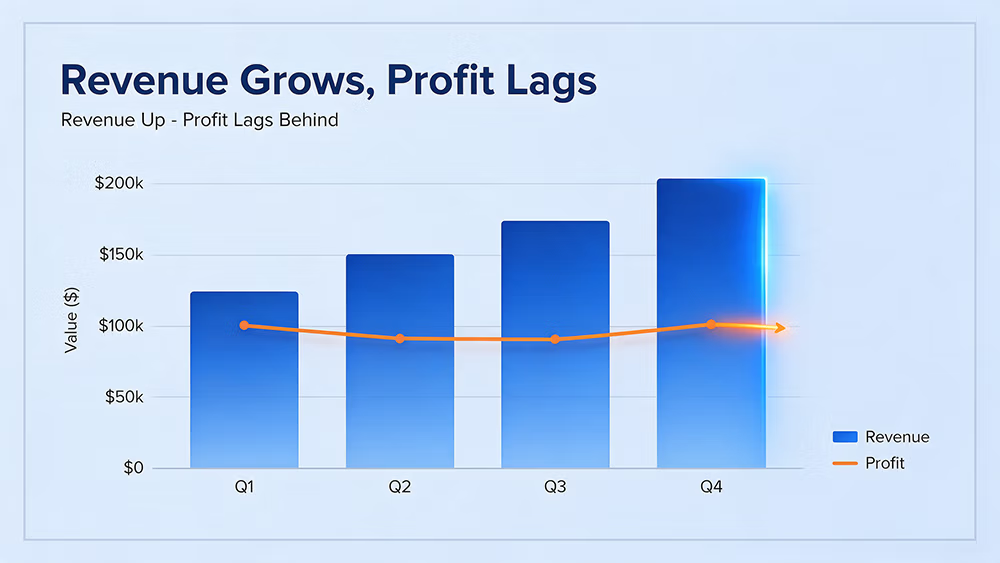
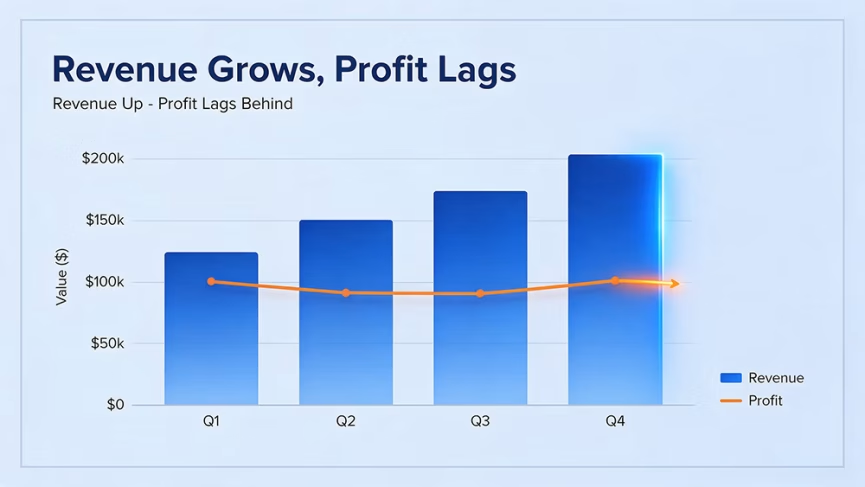
- Your revenue has grown, but profit hasn’t kept pace
- You close your books more than two weeks after month-end
- You can’t confidently forecast cash three to six months out
- A lender, bonding agent, or investor has asked for better financial reporting
- You plan to expand, add a location, or buy another company
- You’re thinking about selling the business in the next five years
- You lost a key accounting employee and can’t find a replacement
If two or more of these sound familiar, the cost of waiting likely exceeds the cost of acting.
A fractional CFO who understands your industry and your market delivers faster results. At TYS LLP, our teams IN Rochester, NY and Walnut Creek, CA. bring decades of accounting, business consulting, and financial planning experience to small and mid-sized businesses. We’ve spent more than 60 years serving the construction industry, where job costing, WIP schedules, and bonding requirements demand precise financial leadership.
Becoming an Extension
We don’t just crunch numbers, we become an extension of your company. Assessing where you stand, identifying opportunities and red flags. TYS builds a strategic plan with clear metrics, and we stay with you as you execute.
Frequently asked Questions
What does a fractional CFO do?
A fractional CFO provides part-time, senior-level financial leadership. Typical responsibilities include cash flow forecasting, budgeting, financial reporting, month-end close oversight, profitability analysis, and strategic planning for growth, financing, or a sale.
How much does a fractional CFO cost?
Fractional CFO services typically run $47,000 to $190,000 per year, depending on scope and hours. That’s 60–80% less than the fully loaded cost of a full-time CFO.
Is a fractional CFO worth it for a small business?
Yes, for most growing businesses. A fractional CFO gives you strategic financial guidance you couldn’t otherwise afford, and better cash management, pricing, and tax planning often offset the fee.
What’s the difference between a bookkeeper, a CPA, and a fractional CFO?
A bookkeeper records daily transactions. A CPA handles tax preparation, audits, reviews, and compliance. A fractional CFO uses that financial data to guide strategy, forecasting, and major business decisions.
Why is there a shortage of accountants?
Large numbers of experienced CPAs are retiring, and fewer students pursue accounting careers, partly because of the 150-hour education requirement for CPA licensure.
Can a fractional CFO work with my existing accounting staff?
Yes. A fractional CFO often supervises and supports your in-house bookkeeper or controller, improves their processes, and fills the strategic gap above them.
Get CFO-Level Leadership Without the CFO-Level Price
The accountant shortage won’t resolve anytime soon. You can keep competing for scarce talent, or you can get the financial leadership you need right now.
Schedule a consultation with TYS LLP today. We’ll review your current financial operations, show you where the gaps are, and build a fractional CFO plan that fits your business and your budget.