



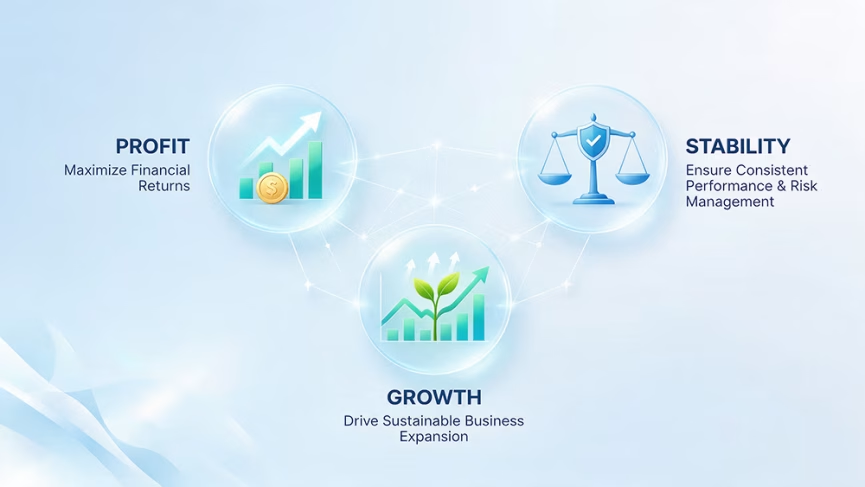
Business owners make important decisions every day. Some are immediate: whether to hire, purchase equipment, pursue a new opportunity, manage an unexpected expense, or address a cash-flow concern. Others shape the future of the company: how to improve profitability, reduce tax exposure, strengthen internal processes, finance growth, or prepare for succession.

Those decisions should not be made in the dark.
At TYS LLP, we believe accounting should do more than record what has already happened. Financial information should help business owners understand where the company stands today, identify risks and opportunities, and make informed decisions about what comes next.
That is why TYS is more than a traditional accounting firm. We work alongside business owners to improve financial visibility, manage tax obligations, strengthen operating practices, and plan for the next stage of the business.
Accounting Should Support Decisions
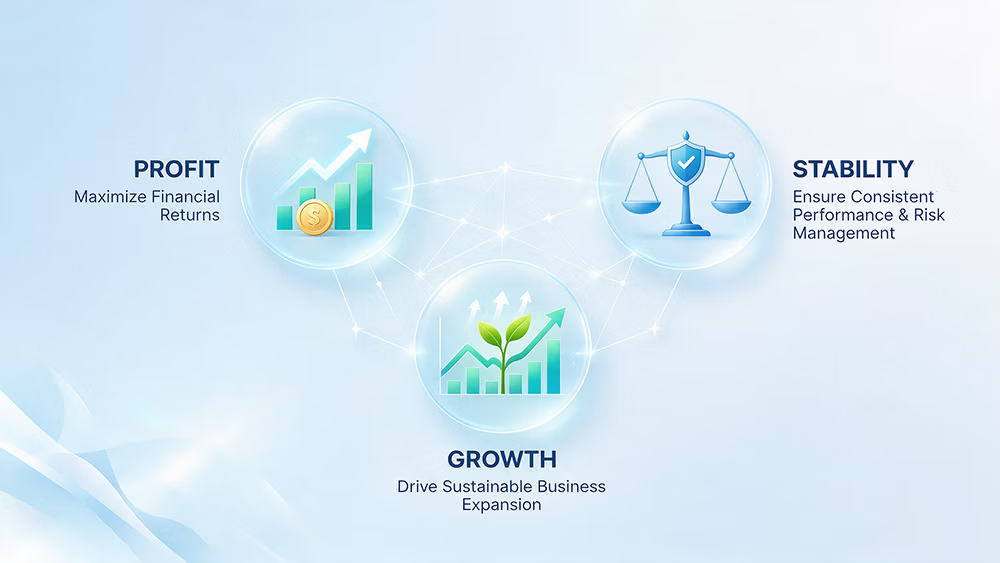
Many business owners receive financial statements, tax returns, reports, and other accounting documents on a regular schedule. Yet having financial information is not always the same as having financial clarity.
A profit-and-loss statement may show whether revenue increased or decreased. A balance sheet may show the company’s assets, liabilities, and equity. A tax return may document compliance with filing requirements. Each is important, but business owners often need help turning that information into action.
The real questions may be:
- Is the business generating enough cash to support current operations?
- Are margins improving or declining?
- Which projects, customers, services, or departments are most profitable?
- Is the company prepared for upcoming tax obligations?
- Can the business support a planned investment, expansion, or new hire?
- Are operating processes creating avoidable inefficiencies or risk?
- What financial information will a lender, banker, investor, or bonding agent need?
- Is the business positioned for a future ownership transition?
Financial guidance helps connect the numbers to those decisions.
Rather than simply providing reports, a trusted accounting and advisory team can help owners understand what the information means, where attention is needed, and which next steps may support the company’s financial goals.
Improving Financial Visibility
Financial visibility means having timely, accurate, and understandable information about the condition of the business.
Without that visibility, owners may rely on a bank balance, a general sense of recent sales activity, or information that arrives too late to influence an important decision. That can make it difficult to spot problems early, evaluate opportunities, or plan with confidence.
Improved financial visibility may include:
- More accurate and timely accounting records
- Financial statements that are easier to understand and use
- Regular review of revenue, expenses, margins, and cash flow
- Clearer reporting by project, department, service line, or location where appropriate
- Better awareness of receivables, payables, debt, and upcoming obligations
- Financial metrics tied to the owner’s operational and long-term goals
For a construction company, for example, financial visibility may mean a better understanding of job costs, project profitability, cash demands, equipment decisions, backlog, and the financial condition of the business as a whole.
For another business, it may mean understanding whether growth is generating sustainable profit, whether overhead is rising too quickly, or whether the organization is ready to invest in people, technology, inventory, or facilities.
The objective is not simply to produce more reports. It is to produce useful information that helps management make better decisions.
Managing Tax Obligations Proactively
Tax planning is most valuable when it is part of an ongoing business conversation—not a year-end scramble.
Business decisions can have tax consequences long before a return is prepared. Equipment purchases, entity decisions, compensation changes, real estate transactions, ownership transfers, expansions, contract terms, and the timing of income and expenses can all affect a company’s tax position.
A proactive approach to tax planning can help business owners:
- Understand estimated tax obligations before deadlines arrive
- Identify planning opportunities during the year
- Consider the tax implications of important transactions
- Coordinate tax decisions with broader business goals
- Reduce surprises at year-end
- Maintain compliance as tax rules and business circumstances change
Effective tax planning is not about pursuing an aggressive shortcut. It is about making informed, timely decisions and maintaining a clear understanding of obligations.
TYS works with business owners to bring tax considerations into the broader financial picture. When accounting, financial reporting, business planning, and tax planning are aligned, owners are better positioned to evaluate tradeoffs and act with greater confidence.
Strengthening Operating Practices
Financial performance is influenced by more than bookkeeping and tax filings. It is also affected by how a company operates.
Unclear responsibilities, inconsistent procedures, delayed communication, weak documentation, and a lack of meaningful performance measures can create avoidable inefficiency and risk. Over time, those issues can affect profitability, client service, cash flow, employee accountability, and an owner’s ability to focus on strategic priorities.
Stronger operating practices may involve:
- Clarifying financial and operational responsibilities
- Documenting repeatable procedures
- Improving communication between management, operations, and accounting
- Establishing approval processes and internal controls
- Creating accountability around key activities
- Defining performance metrics that align with business goals
- Reviewing workflows that may be slowing down decisions or creating unnecessary cost
The right approach depends on the size, complexity, and goals of the business. A growing company may need more formal processes than it needed in its early years. An established organization may need to reassess procedures that no longer support the way it operates today.
TYS helps business owners look beyond the accounting records to consider the systems, practices, and financial processes that influence long-term performance.
Planning for the Next Stage
Every business is at a different point in its lifecycle.
Some owners are focused on stabilizing operations and improving day-to-day financial management. Others are preparing for growth, pursuing new markets, adding staff, expanding services, investing in equipment, or seeking financing. Still others are considering succession, ownership transition, retirement, or the long-term future of the company.
The next stage may involve questions such as:
- Are we financially ready to grow?
- What will expansion require from a cash-flow, staffing, and tax perspective?
- What does the business need to show a lender or bonding agent?
- Are our financial records and reporting systems ready for greater complexity?
- Which risks could affect the value or stability of the business?
- What should we begin doing now to prepare for a future ownership transition?
- How can business and personal financial goals be better aligned?
Planning does not require an owner to know every answer today. It does require a process for evaluating the current situation, identifying priorities, and developing practical next steps.
A strong advisory relationship can help a business owner move from reacting to financial events toward making intentional decisions based on timely information and a clear plan.
A Practical Advisory Approach
At TYS, our approach begins with understanding the business—not just reviewing a set of financial statements.
That may include looking at the company’s current financial condition, tax obligations, reporting needs, operational practices, growth plans, and potential risks. From there, the focus is on identifying meaningful opportunities and developing a practical path forward.
A typical advisory process may include:
- Understand the current situation.
Review financial information, business operations, management goals, and the issues that require attention. - Identify opportunities and risks.
Evaluate areas that may affect profitability, cash flow, compliance, operational efficiency, or long-term growth. - Develop actionable priorities.
Create a plan with clear recommendations, supporting tools, and realistic next steps. - Use financial information to guide decisions.
Continue to evaluate results, adjust priorities when needed, and connect day-to-day decisions to the owner’s larger financial and business goals.
The result is not a one-size-fits-all plan. It is a financial and operational approach built around the realities of the business.
More Than a Year-End Relationship
A business owner should not have to wait until tax season to ask an important financial question.
The most valuable accounting relationships are ongoing. They give owners a resource they can turn to when a new opportunity arises, when a financial concern develops, or when the company needs to make a decision with long-term consequences.
Whether the issue involves accounting support, financial statements, tax planning, business consulting, operating procedures, or long-range planning, the goal is the same: to help business owners make decisions based on clearer information and stronger financial insight.
Start With a Conversation
Financial guidance is not about making a business more complicated. It is about making the information behind important decisions more useful.
TYS LLP works with business owners who want more than compliance support. We help clients improve financial visibility, manage tax obligations, strengthen operating practices, and plan for the next stage of their business.
If you are evaluating a major business decision, looking for better financial clarity, or preparing for growth, a conversation with an experienced accounting and advisory team can be a valuable first step.
Contact TYS LLP to discuss your accounting, tax, financial reporting, and business advisory needs.