



A Better Way to Manage Business Tax Obligations
Tax planning should not begin when a business owner receives a year-end reminder, gathers receipts, or starts preparing a return. The most effective tax strategies are considered throughout the year—when owners still have time to evaluate options, understand consequences, and make informed business decisions.
At TYS LLP, we believe tax planning is more than an annual compliance task. It is an ongoing part of sound financial management. By reviewing financial information regularly, monitoring changes in the business, and discussing major decisions before they are finalized, business owners can approach tax obligations with greater clarity and fewer surprises.
Tax Preparation and Tax Planning Are Different
Tax preparation focuses on accurately reporting what happened during the prior tax year. It is essential work, but much of the result is based on decisions that have already been made.
Tax planning looks ahead.
It involves reviewing the business’s financial position, projected income, cash flow, expenses, major transactions, ownership changes, and other developments that may affect taxes. The purpose is not to chase a last-minute deduction or use an aggressive strategy that does not fit the business. It is to understand the tax implications of legitimate business decisions early enough to evaluate the available options.
For a business owner, the distinction can be significant:
| Tax preparation | Proactive tax planning |
|---|---|
| Reports prior-year activity | Evaluates current and upcoming decisions |
| Often occurs after year-end | Happens throughout the year |
| Focuses on filing accurate returns | Connects tax considerations to business goals |
| Documents income, deductions, and credits | Identifies questions and planning opportunities before decisions are final |
| Responds to completed transactions | Helps owners prepare for future transactions |
Both are important. However, businesses that only focus on preparation may miss opportunities to make more informed decisions during the year.
Why Year-Round Planning Matters
Business conditions can change quickly. Revenue may increase or decline. A company may take on a major project, buy equipment, hire employees, open a new location, change its ownership structure, take on debt, or consider acquiring another business.
Each of these developments can create tax consequences.
A year-round planning process gives owners an opportunity to ask the right questions before decisions become final:
- How could this purchase affect taxable income and cash flow?
- Should a major expense be made this year or next year?
- What tax obligations could arise from a business sale, ownership change, or asset transaction?
- Does projected income suggest that estimated tax payments need to be reviewed?
- Are the company’s records complete enough to support income, deductions, and credits?
- How will a new employee, contractor relationship, compensation change, or benefit affect payroll and tax reporting?
- Are the business’s financial and personal tax goals aligned?
The answers depend on the specific facts of the business, its structure, its financial performance, and applicable tax rules. That is why proactive planning should be an ongoing conversation with qualified tax and accounting professionals—not a generic checklist.
Start With Accurate Financial Information
Tax planning depends on good financial information.
If financial records are incomplete, delayed, or inconsistent, a business owner may not have a reliable picture of income, expenses, profitability, cash flow, or potential tax exposure. Decisions may then be based on estimates rather than current facts.
Accurate records can help business owners:
- Monitor the financial progress of the business
- Prepare reliable financial statements
- Identify sources of income
- Track deductible business expenses
- Prepare tax returns
- Support the items reported on a tax return
- Maintain documentation related to assets, property, and transactions
The IRS notes that good records help businesses monitor their progress, prepare financial statements, identify income and expenses, prepare returns, and support tax-return items. The recordkeeping method does not need to follow one prescribed format, but it should clearly and accurately reflect gross income and expenses.irs+1
For many businesses, this means maintaining current books, reconciling accounts regularly, keeping source documents organized, and reviewing financial reports throughout the year.
Review Estimated Tax Obligations
One of the most common tax-planning issues for business owners is the need to make estimated tax payments.
Businesses, owners, and self-employed individuals may need to make estimated payments when taxes are not fully covered through withholding. The timing and calculation depend on the taxpayer’s situation, legal entity, income, prior-year tax, projected income, and other factors.
The IRS generally divides the year into four estimated-tax payment periods. Failing to pay enough tax by the applicable due dates can result in a penalty, even when the taxpayer ultimately receives a refund at filing.irs+1
For individuals using a calendar tax year, the usual federal estimated-tax due dates are:
| Income period | Typical federal due date |
|---|---|
| January 1–March 31 | April 15 |
| April 1–May 31 | June 15 |
| June 1–August 31 | September 15 |
| September 1–December 31 | January 15 of the following year |
When a deadline falls on a weekend or legal holiday, the due date generally moves to the next business day. State and local obligations may have different requirements and dates.irs
A proactive review can help a business owner avoid assuming that last year’s payment pattern will be appropriate this year. Changes in profit, owner compensation, distributions, investment income, a major transaction, or other income can affect the amount that should be considered.
Use Tax Planning to Support Cash-Flow Management
Taxes are a business obligation, but they are also a cash-flow issue.
A company may appear profitable on paper and still face pressure if funds have not been reserved for income taxes, payroll taxes, sales taxes, estimated payments, or other upcoming obligations. Proactive planning helps owners account for those future commitments before cash is committed elsewhere.
Regular planning conversations can help management consider:
- Projected taxable income
- Timing of revenue and expenses
- Current and expected cash balances
- Quarterly estimated tax needs
- Payroll and employment-tax obligations
- Major purchases or capital investments
- Owner distributions and compensation
- Seasonal fluctuations in the business
- Upcoming financing, bonding, or banking needs
For a construction company, cash-flow planning may be especially important because revenue, project costs, retainage, receivables, equipment needs, subcontractor obligations, and seasonal work can all affect the availability of cash at different points during the year.
The goal is not simply to reduce a tax bill. It is to help the business plan for legitimate obligations while preserving the cash needed to operate responsibly.
Discuss Major Decisions Before They Happen
The best time to ask about the tax impact of a significant business decision is often before the decision is completed.
Business owners should consider consulting their accounting and tax advisors before making decisions involving:
- The purchase, sale, or financing of equipment
- The purchase or sale of real estate
- A significant asset sale
- A merger, acquisition, or business sale
- Changes in entity structure or ownership
- New owner compensation, bonuses, or distributions
- Hiring employees or changing worker classifications
- Launching a new service, division, or location
- A major contract or expansion project
- Succession planning or ownership transition
- Gifts, estate-planning decisions, or family-business transfers
This does not mean every decision needs to be delayed for a tax analysis. It means that when a decision is material, irreversible, or likely to affect the company’s financial position, tax considerations should be part of the broader conversation.
A tax strategy should support the business strategy—not replace it.
Keep Supporting Documents Organized
Tax planning and compliance are easier when source documents are organized and available.
The IRS identifies supporting records such as sales slips, invoices, paid bills, receipts, deposit slips, canceled checks, and other records that substantiate income, deductions, and credits.irs+1
A practical recordkeeping system may include:
- Sales and revenue records
- Bank and credit-card statements
- Vendor invoices and payment records
- Receipts for deductible business expenses
- Payroll and contractor documentation
- Loan and financing documents
- Equipment and asset-purchase records
- Records related to property acquired, improved, sold, or transferred
- Prior-year tax returns and notices
- Documentation supporting deductions, credits, and tax elections
Business owners with employees should pay particular attention to employment-tax documentation. The IRS generally requires employment-tax records to be maintained for at least four years after the tax is due or paid, whichever is later.irs+1
Retention requirements can vary based on the type of record and the transaction involved. Business owners should work with their tax advisor to establish a records-retention approach appropriate for their circumstances.
Build a Tax Planning Calendar
Tax planning becomes more manageable when it is built into the business calendar.
Rather than waiting until year-end, a business may benefit from scheduled financial and tax-planning reviews at key points during the year.
A practical planning rhythm might include:
First quarter: Establish the baseline
Review the prior year’s results, tax filings, estimated-payment history, projected income, and known changes for the new year. Confirm that bookkeeping and recordkeeping processes are producing timely financial information.
Second quarter: Compare projections to performance
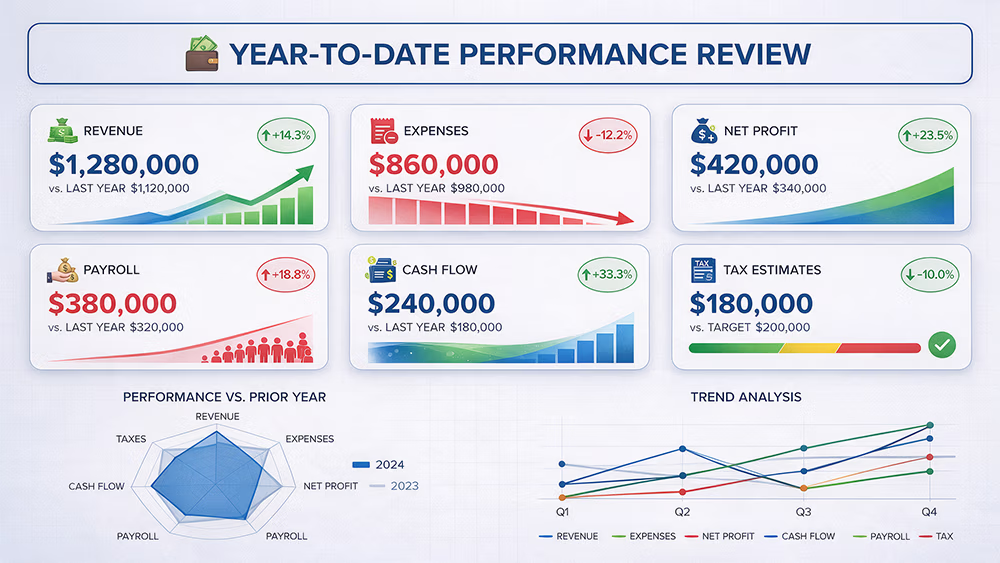
Evaluate year-to-date revenue, expenses, profit, payroll, cash flow, and tax estimates. Discuss whether business conditions differ meaningfully from original expectations.
Third quarter: Prepare for year-end decisions
Review major purchases, capital investments, compensation decisions, expected income, potential transactions, and tax-planning opportunities that require lead time.
Fourth quarter: Finalize year-end actions
Use updated financial information to evaluate year-end planning decisions, organize records, confirm reporting needs, and prepare for tax filings and estimated-payment obligations.
This calendar is not a substitute for professional tax advice. It is a framework for keeping tax questions connected to the financial realities of the business.
Proactive Tax Planning Is Not About Shortcuts
It is important to distinguish proactive planning from chasing tax gimmicks.
A sound tax strategy should be based on accurate records, legitimate business activity, applicable law, and the company’s actual financial and operational goals. The purpose is to understand the consequences of decisions, maintain compliance, and use available planning opportunities responsibly.
Good planning considers more than the current year’s tax return. It also considers:
- The effect on cash flow
- The impact on financial reporting
- The long-term needs of the business
- The owner’s broader financial goals
- The documentation needed to support the transaction
- The potential effect on lenders, banking relationships, or bonding capacity
- The risks and administrative requirements that may accompany a strategy
The right strategy is not always the one that produces the largest immediate deduction. In some cases, maintaining liquidity, supporting financing needs, improving financial-statement presentation, or preserving long-term flexibility may be equally important.
A More Confident Approach to Tax Decisions
Business owners cannot always control tax law, economic conditions, or the timing of every financial event. They can, however, build a process that gives them better information before important decisions are made.
Proactive tax planning helps create that process.
By maintaining accurate records, reviewing financial performance regularly, monitoring estimated obligations, planning for cash needs, and discussing major transactions in advance, business owners can replace last-minute tax surprises with more thoughtful financial decision-making.
TYS LLP works with business owners to integrate tax planning into the larger financial picture. Our goal is to help clients understand their obligations, evaluate opportunities, maintain compliance, and make business decisions with greater clarity.
Contact TYS LLP to discuss year-round tax planning, tax preparation, and accounting support for your business.