




Strategic Modernization for Small Businesses and High-Income Taxpayers
The Taxpayer Assistance and Service Act (TAS Act) is landmark federal legislation designed to modernize IRS operations, reduce administrative backlogs, upgrade taxpayer technologies, and streamline procedural protections for business owners and high-net-worth individuals. By fundamentally overhauling how the IRS handles digital processing, estimated tax payments, S corporation elections, and audit enforcement, the Act introduces critical structural shifts that demand proactive tax planning. Navigating these legislative changes effectively allows businesses and high-income taxpayers to mitigate compliance risks and capture significant tax savings.
Navigating IRS Modernization and Administrative Reforms
The legislative framework of the Taxpayer Assistance and Service Act delivers widespread administrative shifts aimed at increasing operational transparency and security. A key pillar of the Act mandates that paper-filed returns prepared electronically include machine-readable barcodes, alongside requiring optical character recognition (OCR) technology for paper correspondence. This rapid digitization directly impacts pass-through entity taxation and large partnership filings by accelerating return processing and audit selection algorithms.
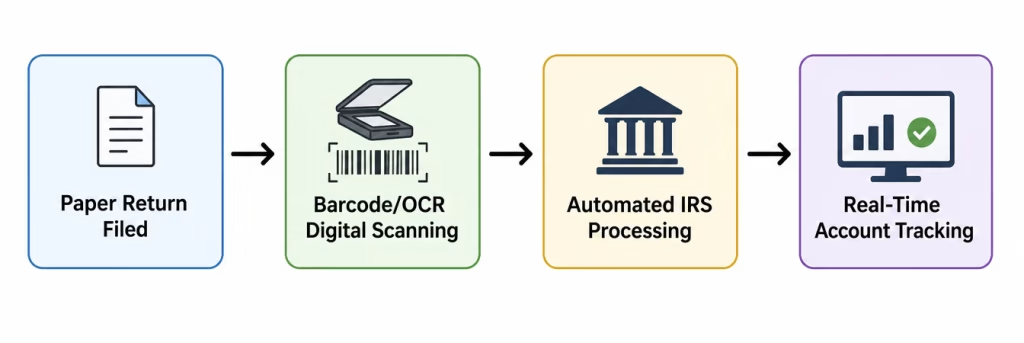
Furthermore, the Act enforces operational visibility by requiring the Treasury to launch public dashboards displaying processing wait times, callback success rates, and live backlogs. Taxpayers also gain expanded access to online portals reflecting six years of notices, return histories, and authorized representative submissions.
| Key Modernization Provision | Statutory Reference | Direct Impact on Taxpayers & Businesses |
| Digitization & OCR Scanning | Section 101 | Eliminates paper transcription errors; speeds up processing of paper-filed returns. |
| Public Backlog Dashboards | Section 102 | Tracks average processing times and phone wait metrics in real time. |
| Digital Account Portals | Section 104 | Grants 6-year historical document viewing and direct electronic notice response tools. |
| Math Error Specificity | Section 105 | Forces the IRS to itemize exact line items, Code sections, and adjustments on notices. |
These technological upgrades mean the IRS will detect filing inconsistencies faster than ever. Navigating these changes effectively requires working alongside knowledgeable tax accountants who maintain continuous oversight of your digital tax transcripts and electronic filings.
Core Small Business Relief and Structural Reforms
For middle-market enterprises and closely held businesses, the Taxpayer Assistance and Service Act provides practical administrative relief across entity management, payment schedules, and third-party interactions.
1. S Corporation Election Relief (Section 902)
Historically, late Subchapter S elections required burdensome private letter rulings or strict administrative relief procedures. The Act updates Internal Revenue Code (IRC) Section 1362(b), allowing small business corporations to file an S corporation election on their timely filed tax return (including extensions) for that taxable year. It also grants the Secretary explicit authority to treat late revocations as timely upon a showing of reasonable cause.
2. Standardized Estimated Tax Schedules (Section 903)
The Act eliminates the uneven spacing of individual estimated income tax installments under IRC Section 6654(c)(2). The traditional June 15 and September 15 due dates are shifted to July 15 and October 15, creating true three-month quarterly gaps that simplify cash flow management for business owners and self-employed professionals.
3. Electronic Mailbox Rule (Section 905)
Under amended IRC Section 7502(c), the long-standing “mailbox rule” is officially extended to electronic submissions and electronic tax payments. An electronic payment or document transmitted on or before the due date is deemed timely filed upon transmission, even if server processing delays receipt by the IRS.
4. Voluntary Contractor Withholding (Section 901)
To help businesses manage 1099 compliance and avoid year-end tax surprises for 1099 workers, the Act establishes a voluntary withholding framework under IRC Section 3402(p) for non-wage remuneration paid to independent contractors.
5. Enhanced Third-Party Contact Notice Protections (Section 906)
When the IRS conducts audits, it often reaches out to vendors, banks, or customers. The Act amends IRC Section 7602(c) to require the IRS to provide taxpayers with a specific list of items sought and a 45-day window to provide the information themselves before contacting third parties.
Enhanced Taxpayer Protections, Audits, and Litigation Rights
Beyond small business mechanics, the Taxpayer Assistance and Service Act reinforces due process protections during IRS collection actions, penalty assessments, and Tax Court litigation.
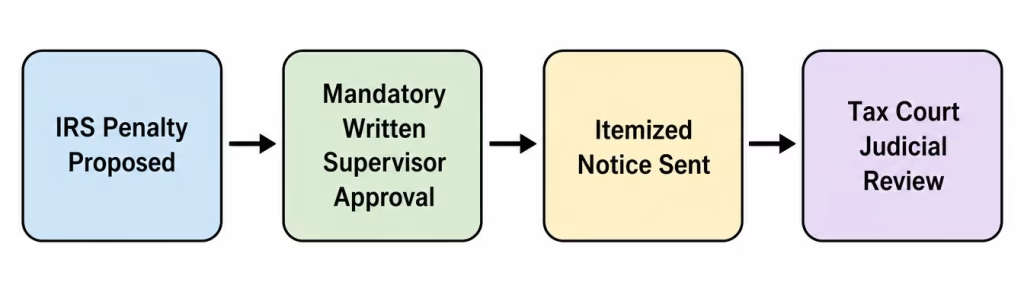
Mandatory Supervisory Approval for Penalties (Section 113): Amends IRC Section 6751(b) to stipulate that no administrative penalty or multi-year credit disallowance period can take effect unless personally approved in writing by the immediate supervisor on or before the initial written determination notice is issued.
Expansion of Tax Court Jurisdiction (Sections 307–312): The Tax Court gains expanded authority, including equitable tolling of petition deadlines, de novo review of innocent spouse relief claims, jurisdiction to issue refunds in Collection Due Process (CDP) cases, and the ability to hear refund suits concurrently with district courts.
Full Payment Rule Exceptions (Section 312): Taxpayers under active installment agreements or designated in Currently Not Collectible (CNC) status can now bring tax liability refund suits without paying the full contested tax balance upfront.
Disaster Relief Extensions (Section 116): Mandates a 120-day extension window for disaster declarations and permits state governors to trigger federal tax relief periods for localized catastrophes.
High-net-worth taxpayers must integrate these statutory safeguards into their broader financial strategies. Coupling these procedural rights with proactive tax planning strategies—such as leveraging the Section 179 deduction for equipment acquisitions, maximizing business tax deductions, and optimizing international reporting—ensures strong defense against aggressive enforcement.
Strategic Guidance for High-Net-Worth Individuals & Expat Compliance
The Act makes targeted changes for international taxpayers and high-net-worth individuals managing foreign financial assets:
- Unified FBAR and Income Tax Filing (Section 201): Foreign Bank and Financial Account Reports (FBAR / 31 U.S.C. 5314) are now aligned directly with the federal income tax return deadline, treating an FBAR as timely filed if included with a timely filed income tax return.
- Foreign Currency Loss Relief (Section 203): Increases the personal foreign currency transaction exclusion threshold under IRC Section 988(e) from $200 to $1,000 (indexed for inflation). Additionally, it allows individuals selling a foreign personal residence to match foreign currency losses on qualified mortgage debt against foreign currency gains on the property sale.
- Increased Simplified Foreign Tax Credit Thresholds (Section 204): Expands the IRC Section 904(j) election threshold for simplified Foreign Tax Credit reporting from $300 ($600 joint) to $1,000 ($2,000 joint), subject to annual inflation adjustments.
- Low-Income Dual-Citizen Expatriation Relief (Section 206): Eases regulatory burdens for dual citizens living abroad seeking relief from the IRC Section 877A exit tax provisions.
Whether evaluating multi-jurisdictional compliance or structuring business asset purchases, leveraging expert CPA services for small business ensures your capital remains protected under evolving federal laws.
Frequently Asked Questions
What is tax prep for small businesses under new legislation?
Tax prep for small businesses encompasses comprehensive return preparation, compliance review, and tax positioning in light of updated statutory rules. Under recent legislation like the Taxpayer Assistance and Service Act, tax prep also involves monitoring IRS digital accounts, managing automated notice responses, and aligning entity elections with strategic timing rules.
How do I choose a tax accountant near me for complex business needs?
When searching for a local financial partner, prioritize firms that offer forward-looking tax advisory rather than basic, reactive filing. Look for smart tax accountants who understand pass-through entity structures, audit defense rules, structural legislation like the TAS Act, and long-term tax mitigation strategies tailored to your industry.
How do the new estimated tax payment dates affect my business cash flow?
The Taxpayer Assistance and Service Act shifts the traditional Q2 (June 15) and Q3 (September 15) individual estimated tax payment due dates to July 15 and October 15. This creates equal, three-month quarters that prevent cash squeezes during early summer and mid-autumn, allowing business owners to retain capital longer and plan quarterly distributions more accurately.
What should I do if I receive an automated IRS math error notice?
Do not pay the asserted balance automatically. The TAS Act requires the IRS to send highly detailed notices specifying the exact line item, Internal Revenue Code section, and calculation change made. You have a statutory window to request an abatement of the assessment. Work immediately with your CPA to review your original return, verify the code section cited, and file a formal abatement request.
With over 60 years of tax accounting experience, TYS Advisors provides proactive tax planning, advisory, and compliance services to help small-to-medium business owners and high-net-worth individuals minimize tax liabilities, navigate complex legislative changes, and achieve long-term financial growth.
Contact TYS Advisors today at our Rochester, NY or Walnut Creek, CA offices to schedule your strategic tax consultation.